
Student societies often reflect the intellectual climate of their time. Some emerge around cultural movements, others around political activism, and a few around enduring philosophical traditions. The Oxford Hayek Society belongs to the latter category. Rather than positioning itself as a campaign group or a transient political club, it has developed over decades as a forum dedicated to the study and discussion of individual liberty, free markets, and the rule of law within one of the world’s most influential academic environments.
The Oxford Hayek Society: A Case Study in the Revival of Classical Liberal Thought
Student societies often reflect the intellectual climate of their time. Some emerge around cultural movements, others around political activism, and a few around enduring philosophical traditions. The Oxford Hayek Society belongs to the latter category. Rather than positioning itself as a campaign group or a transient political club, it has developed over decades as a forum dedicated to the study and discussion of individual liberty, free markets, and the rule of law within one of the world’s most influential academic environments.
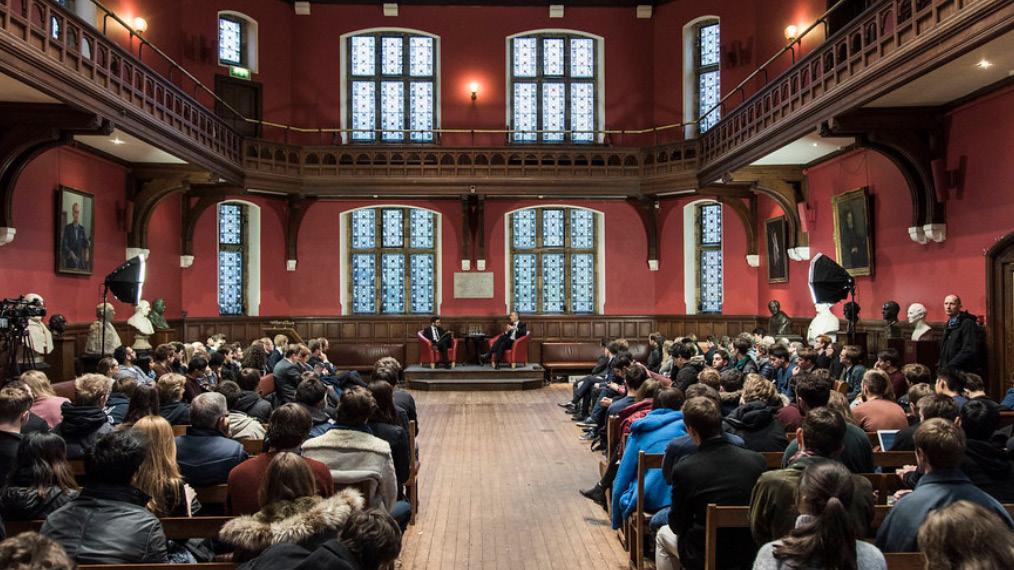
Examining the Oxford Hayek Society as an intellectual phenomenon reveals something broader than a single campus organization. It illustrates how classical liberal ideas continue to find institutional form in contemporary universities and how debates about economic freedom, constitutionalism, and spontaneous order remain relevant to new generations of students.
Intellectual Foundations and Historical Context
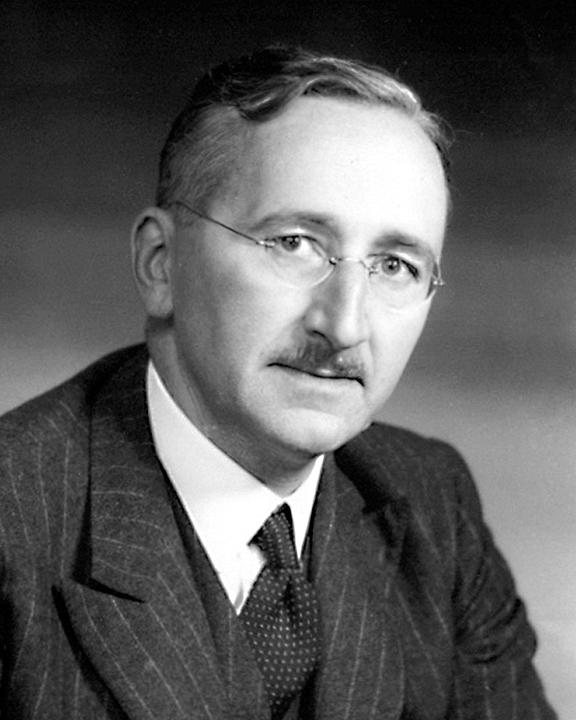
Founded in 1983, the Oxford Hayek Society takes its name from Friedrich August von Hayek (1899–1992), the Austrian-born economist and political philosopher whose work on knowledge, spontaneous order, and the limits of central planning reshaped twentieth-century political economy. The decision to anchor the society in Hayek’s intellectual legacy signals more than admiration for a single thinker. It reflects a commitment to a broader tradition of classical liberalism concerned with the institutional preconditions of freedom.
Hayek’s emphasis on dispersed knowledge and the limits of centralized authority remains a defining reference point. His arguments about the informational function of prices, the evolution of social institutions, and the dangers of overreach in state planning provide a conceptual framework for many of the society’s discussions. Yet the society’s intellectual scope extends beyond Hayek himself, engaging with a range of thinkers in economics, political philosophy, and constitutional theory.
Between 2008 and 2012, the organization operated under the name Oxford Libertarian Society. This period reflected an attempt to position the group within a broader political vocabulary. Its eventual return to the Hayek name suggests a renewed emphasis on intellectual lineage and theoretical depth rather than narrow political branding.
A Commitment to Liberty as an Academic Question
At its core, the Oxford Hayek Society is committed to the advancement of individual liberty understood as both social and economic freedom. This includes support for private property, free markets, civil liberties, and the rule of law. However, the significance of these commitments lies not merely in their content but in how they are examined.
Rather than presenting liberty as a slogan, the society treats it as a subject of inquiry. What are the institutional structures that sustain freedom? How does the rule of law constrain arbitrary power? In what ways do market processes coordinate complex societies? And how should liberal principles respond to contemporary challenges such as regulation, monetary instability, or political polarization?
Networks and Institutional Connections
The society maintains connections with several free-market think tanks, including the Institute of Economic Affairs, the Adam Smith Institute, and the Globalisation Institute. These links situate the organization within a wider ecosystem of research and policy-oriented institutions concerned with economic freedom and institutional reform.
Such relationships are significant for two reasons. First, they provide students with exposure to contemporary policy debates and research beyond the university curriculum. Second, they connect abstract philosophical discussions with real-world institutional analysis. The presence of external speakers and affiliated thinkers allows the society to function as a bridge between academic reflection and applied political economy.
The Structure of Intellectual Engagement
During academic term, the society hosts a mixture of speaker events and social gatherings. The typical format of a speaker event involves a brief lecture followed by questions and informal discussion. This structure reflects a commitment to dialogue rather than unilateral presentation. The lecture sets the framework, but the discussion shapes the intellectual atmosphere.
Topics vary widely. Current affairs are examined through the lens of classical liberal thought. Economic policy debates are analyzed in relation to knowledge problems and incentive structures. Historical case studies are revisited to explore how institutional frameworks evolve. Political philosophy remains central, particularly questions about authority, legitimacy, and constitutional limits.

Events are open not only to members but to non-members as well. Students from diverse political perspectives are encouraged to attend and contribute. This openness is critical. A society devoted to liberty cannot thrive in intellectual isolation. By welcoming disagreement and cross-ideological participation, the Oxford Hayek Society reinforces its commitment to debate as a method of inquiry.
Following formal discussions, participants often continue conversations in more informal settings. These post-event gatherings are not incidental. They cultivate community and sustain intellectual relationships beyond structured debate. The combination of formal lecture and informal exchange creates a culture of sustained engagement rather than episodic activism.
Student Societies as Laboratories of Political Thought
The Oxford Hayek Society can also be understood as part of a broader pattern in higher education: the emergence of student-led forums that test and refine political ideas outside formal curricula. Universities are not only places of instruction; they are arenas of intellectual experimentation. Societies like this one provide a space where students encounter ideas that may not always dominate lecture halls.
This dynamic is particularly relevant in contexts where debates about economic freedom and state intervention are politically charged. By framing such issues within an academic setting—through reading groups, lectures, and critical questioning—the society transforms partisan topics into subjects of structured inquiry.
The result is not uniform agreement but informed disagreement. Participants learn to articulate arguments, question assumptions, and examine evidence. In this respect, the society’s value lies not only in the ideas it promotes but in the habits of reasoning it cultivates.
Why Hayek Still Matters on Campus
The continued existence of a Hayek-inspired society at Oxford decades after its founding suggests the enduring relevance of the questions Hayek raised. The problem of knowledge in large societies, the tension between freedom and equality, and the institutional foundations of economic coordination remain central to contemporary discourse.
Moreover, in an era of rapid technological change and expanding regulatory frameworks, debates about the limits of centralized authority have gained renewed urgency. Students encountering these challenges may find in classical liberal thought a conceptual toolkit for thinking through complexity without defaulting to technocratic certainty.
The Oxford Hayek Society thus operates not as a relic of twentieth-century debates but as a living forum in which those debates are reinterpreted in light of contemporary concerns.
Conclusion: An Intellectual Community Rather Than a Campaign
Viewed analytically, the Oxford Hayek Society represents a sustained effort to anchor classical liberal ideas within a modern university setting. Its commitment to private property, free markets, civil liberties, and the rule of law is expressed through discussion, reading, and dialogue rather than slogans or activism.
As an intellectual phenomenon, it demonstrates how student societies can function as laboratories for political thought—spaces where enduring ideas are revisited, contested, and adapted. In doing so, it contributes to a broader culture of debate that remains essential to academic life.
In a university environment characterized by diversity of opinion, such societies play a crucial role: not in enforcing consensus, but in preserving the practice of argument itself. The Oxford Hayek Society stands as one example of how traditions of liberty continue to find institutional expression in contemporary higher education.
Interview with a Policy Researcher on Regulatory Reform
Regulatory reform is often presented as a technical exercise: remove outdated rules, simplify procedures, and reduce administrative costs. In practice, the subject is more complex. Regulations shape who can enter a market, how public risks are managed, what information businesses must provide, and how citizens challenge unfair decisions. This interview-style discussion explores what reform means, […]
The Gig Economy: Freedom or Precarity?
The gig economy is often presented through two opposing stories. In one, workers escape rigid schedules, choose their own projects, and build careers on their own terms. In the other, platforms replace stable jobs with uncertain tasks, weak protections, and unpredictable income. Both stories contain some truth. Gig work can provide genuine autonomy, especially for […]
The Intellectual Origins of Austrian Economics
Austrian economics emerged in Vienna in the nineteenth century, but its intellectual roots extend much further back. The school grew from debates about value, exchange, money, capital, entrepreneurship, and the proper method of economic analysis. Its early thinkers changed the starting point of economics by placing individual choice, subjective evaluation, time, uncertainty, and market coordination […]